
Last summer, Poland went through a heatwave that overwhelmed its emergency services. In just three days, from 28 to 30 June, paramedics recorded 477 deaths across the country, and in the Łódź region rescue teams logged 37 heat-related cases in a single weekend, compared with 9 the week before. In Łódź, one in four residents is 65 or older. Yet when we looked for help, we found no official, promoted network of cool places like the one Warsaw ran this year, and no navigation that treats shade as something that matters.
That is how Cool Łódź started. A normal map gives you the shortest route, which on a summer afternoon is often the sunniest. We wanted a route that asks a different question: where is the shade?
Cool Łódź has three parts:
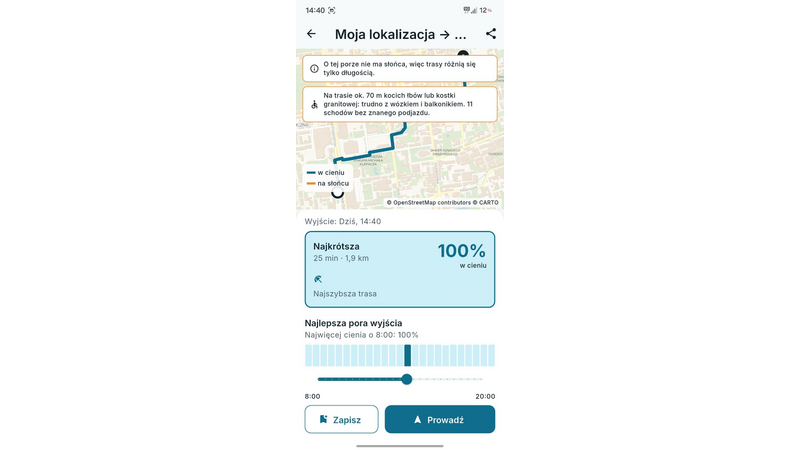
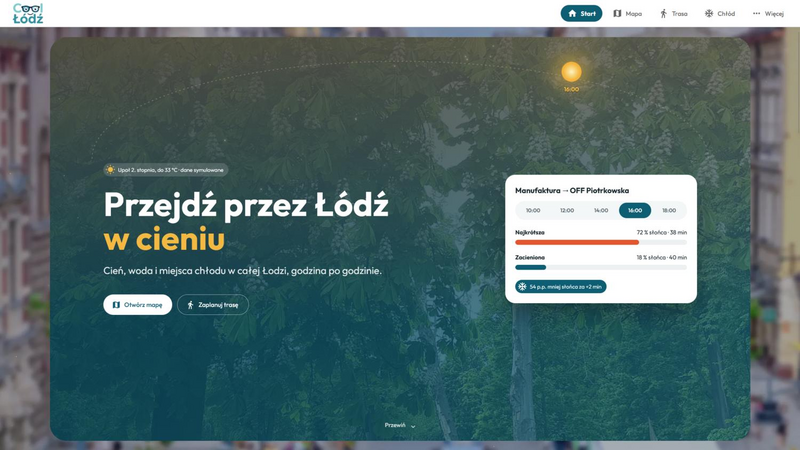
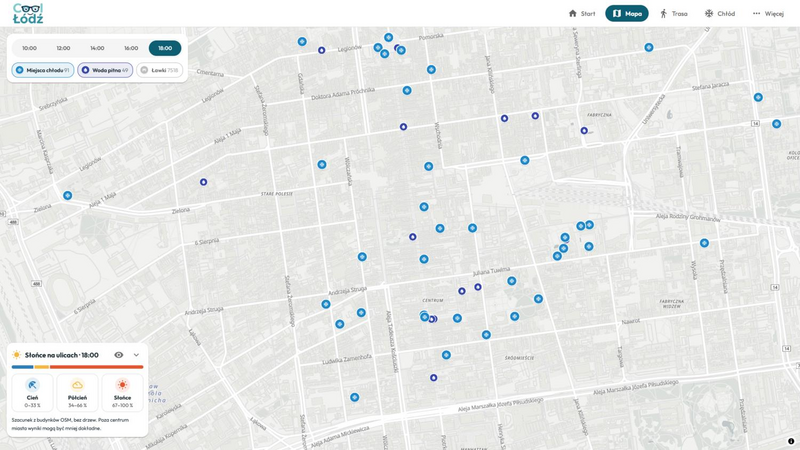
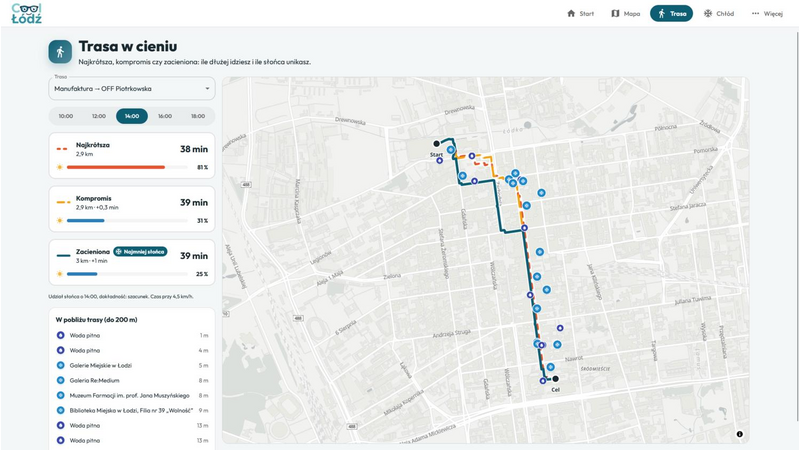
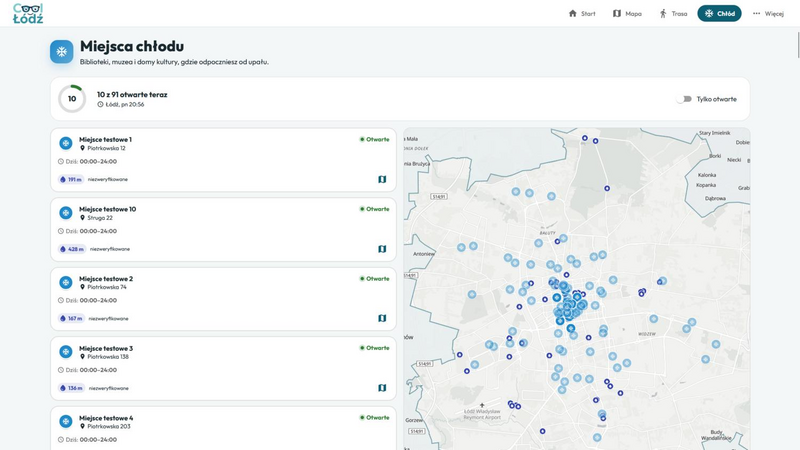
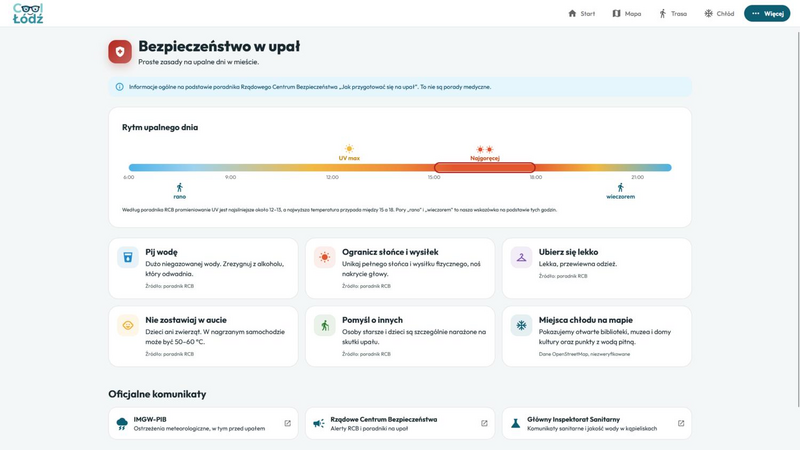
A website that works instantly after scanning a QR code, with no installation and no login. It shows three route options for each trip: shortest, compromise and shaded. On our test route from Manufaktura to OFF Piotrkowska at 2 pm, the shaded variant cuts sun exposure from 81% to 25% for about one extra minute of walking.
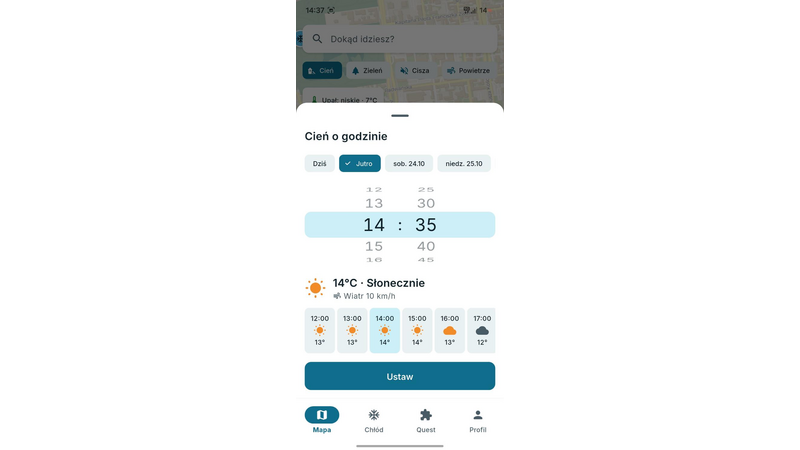
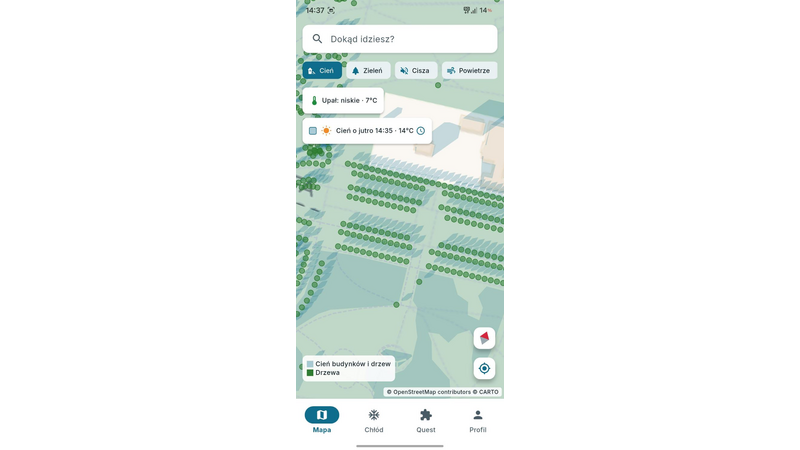
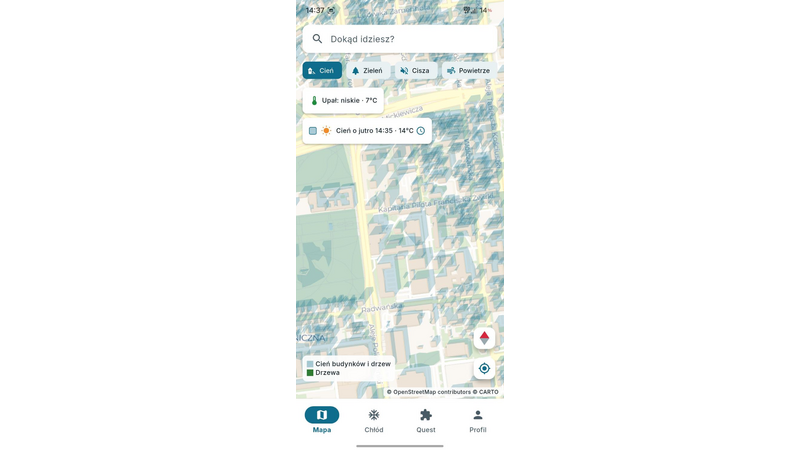
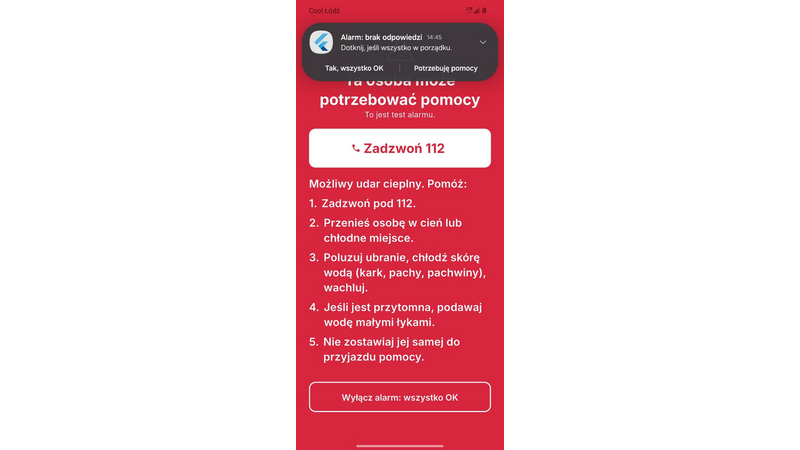
An Android app that calculates shade live from buildings, trees, the sun’s position and real weather, for any address in Łódź. It adds map layers (shade, greenery, noise, air quality, heat islands, water, benches), comfort profiles for seniors, tourists and dog owners, a heat alarm, a day plan for hot days, and a city-wide game that rewards walking at safe hours and visiting cool places.
A city dashboard that shows where sidewalks are more than 400 m from any cool place (52% in our demo area, central Łódź) and ranks public buildings that could become new cool places
What makes this project different is that we did not stop at the idea. We tested it against reality by talking to a representative of the Łódź City Hall IT Department and by researching the regulations that would apply: what a city can and cannot do, open data rules, personal data, medical device law, emergency numbers and digital accessibility. The conversation changed our design. The city should not publish a commercial app or give discounts, so the commercial layer (rewards, sponsors) would run through the operator of the Łódź Resident Card, and the city would share data through its open data portal instead of operating a dashboard. We also changed how the app talks about health: it states facts, such as where water is and which symptoms mean calling 112, and it does not diagnose or call emergency services on its own
We are honest about what is still open. The demo covers central Łódź, the legal model and publisher still need to be agreed with the city, and we do not claim to save lives. Our goal is to remove barriers (missing information, closed buildings, no shade on the way) and to measure whether people use it. A 2027 summer pilot, with a fallback plan that needs no city involvement, is ready to go
We are team Better Than Never, five students who built this in a few weeks, and we would like to see Łódź walkable in the shade
Comments (0)